
Getting Little Feet on the Trail: A Parent’s Guide to Hiking with Kids
Hiking with kids changes the pace of a walk completely. A 20-minute stretch can turn into an hour when there’s a beetle to examine or a stream to crouch beside. That’s not a problem, that is the hike. Here’s what helps make those outings actually work.
Why hiking works for families
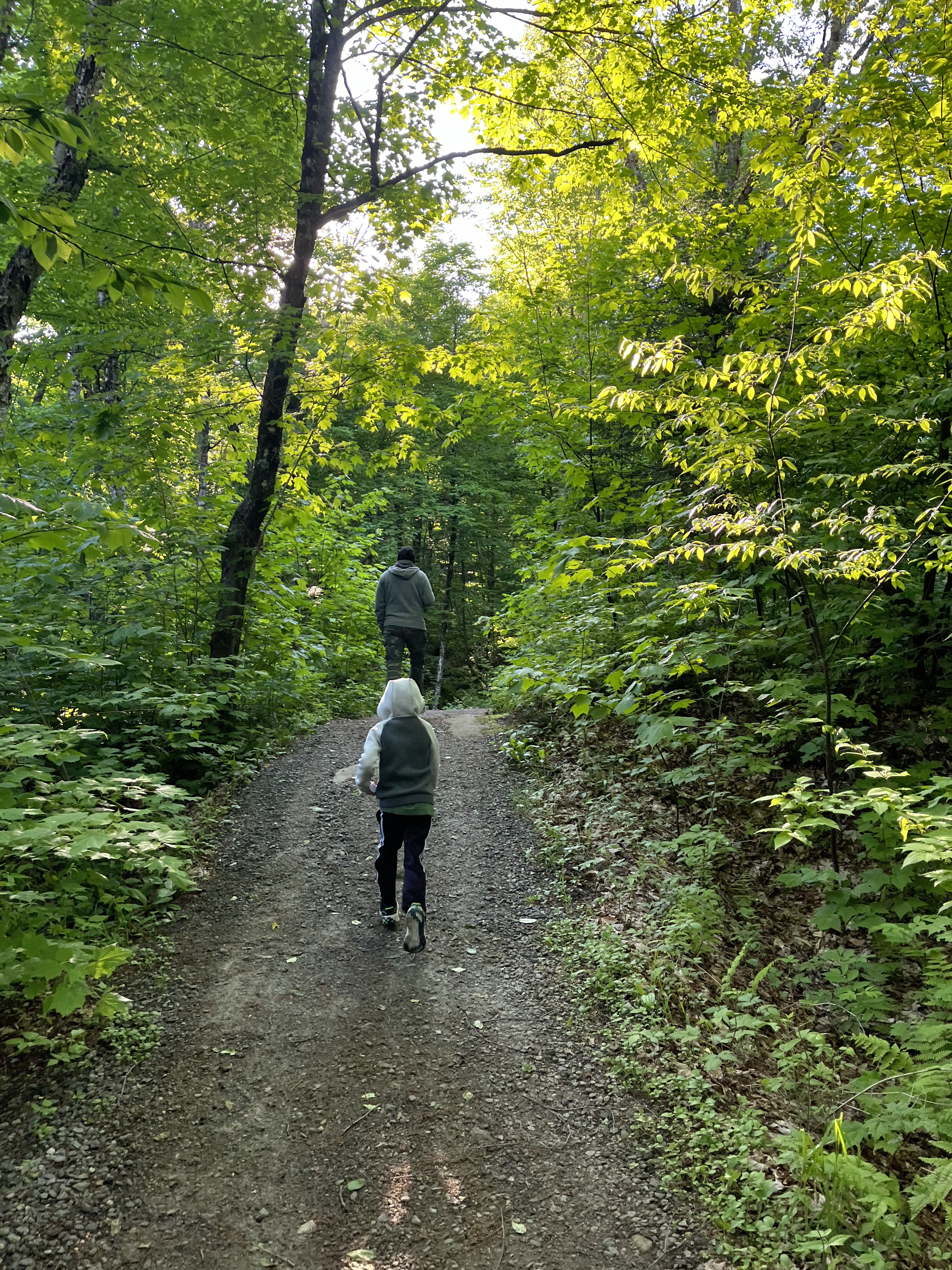
Kids are natural observers. On a trail, everything is worth investigating: a striped insect, a cluster of red berries, the sound of water moving through rocks. Hiking gives them room to lead, question, and explore at their own speed. It’s also an activity where slowing down might be the right move.
Choosing the right trail
Start short. For young children, trails under 2 km with minimal elevation are a good starting point. Look for paths with built-in reasons to stop:
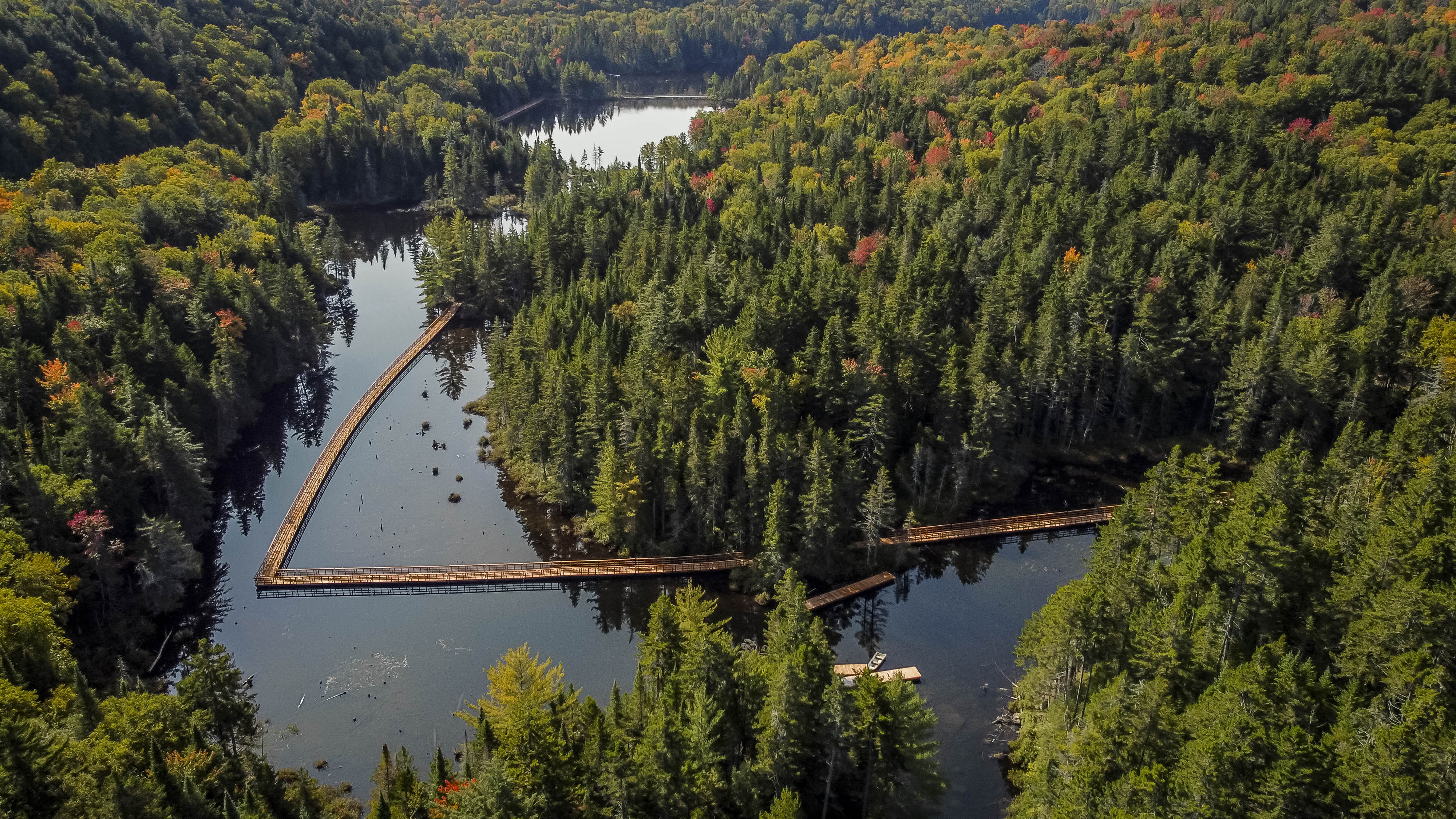
- Streams and small bridges: kids find these genuinely hard to walk past. Our “L’aquatique” trail (1 km) is a good example: a boardwalk crosses directly over Lac la Truite, which tends to stop everyone, not just the kids.
- Exposed roots and rocks: good for balance and climbing. You’ll find plenty along the trails at Parc ÉCO Laurentides, just make sure to respect the “Leave No Trace” principle.
- Open clearings: a natural spot to rest and eat. Picnic tables are available at the reception-pavilion, along with a gazebo.
Download the Parc ÉCO Laurentides trail map before you leave, or use the Ondago app, the trail map is available directly in the app.
What to pack
SNACKS: their favorite ones. This helps create a positive association. Bring more food and water than you expect to need. Pack layers, as conditions can shift quickly. A basic first-aid kit, sunscreen, hats, and sunglasses cover the essentials. For younger children, a small familiar toy or comfort item can help settle nerves on longer outings.
On the trail: let them set the pace
If a child stops to look at something, stop with them. That curiosity is exactly what you want to encourage. Let them choose which fork in the path to take (within reason, always keep an eye on your map!), which log to balance on, which rock deserves a closer look. And speaking of maps, map-reading is like language: it’s better to learn it early. Involve them in the trail navigation. When kids feel ownership over the hike, they stay engaged far longer.
Games that keep energy up
When momentum fades, a simple game can reset the group’s dynamic:
- I Spy: colours, shapes, animal tracks
- A scavenger hunt: find something red, something round, something that makes a sound
- A group story where each person adds one sentence as you walk
- Open-ended questions: “If you could build a treehouse anywhere in these woods, which tree would you choose?”
Timing
Morning hikes tend to work better with young children: energy is higher and the light is better. Avoid scheduling around usual nap times. Check the forecast the evening before and aim for a window with stable weather.
After the hike
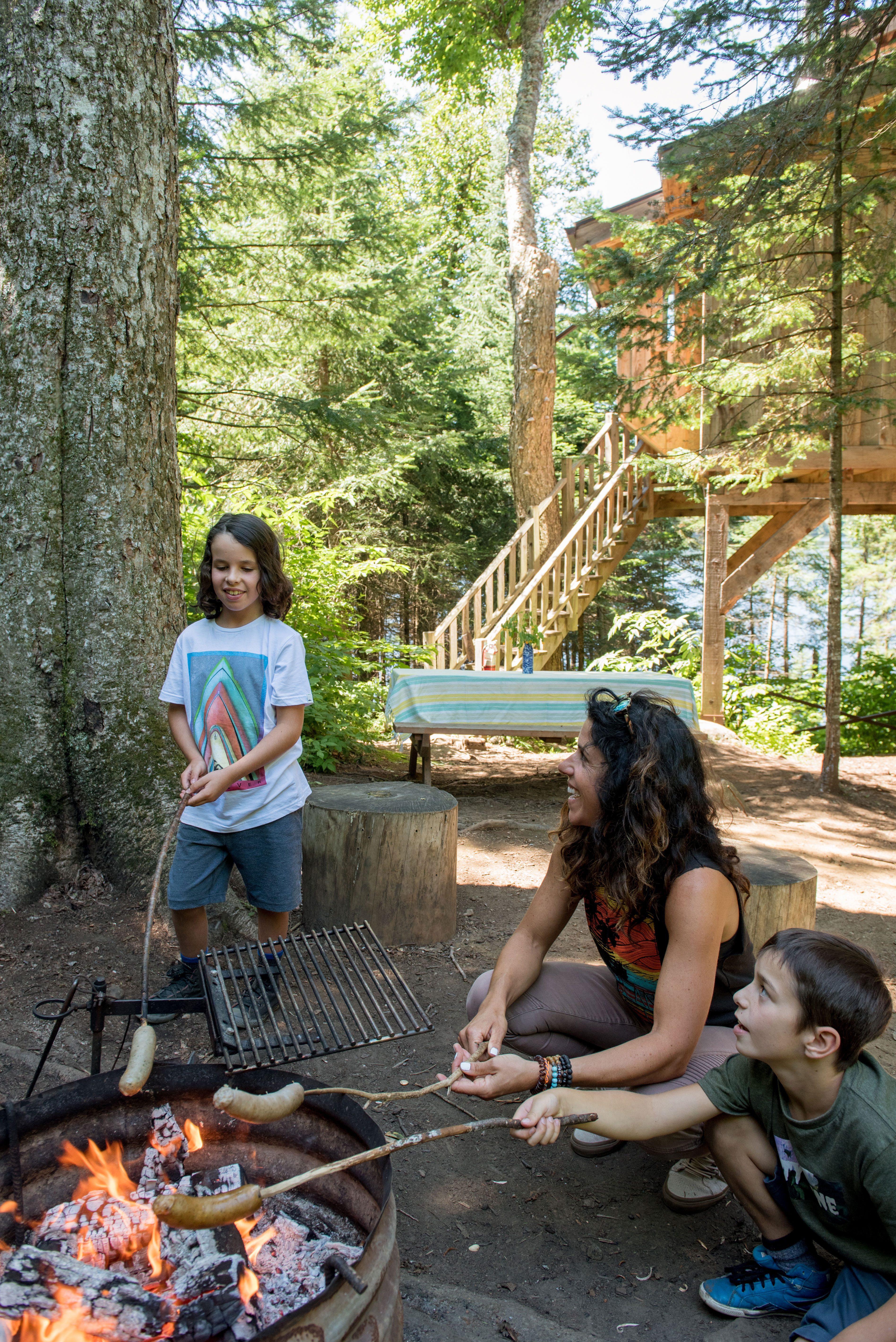
Take a moment to mark the finish. Talk about what they noticed, what surprised them, what they’d want to find next time. That debrief is part of the outing, it helps kids connect what they did with wanting to do it again. Keeping the favorite snack until the end to celebrate the hike works well too.
One more thing
The best family hike isn’t the longest or the most scenic. It’s the one where everyone wants to go back another time. Start small, stay flexible, and let the wilderness do the rest.
Imagine stepping off the deck and onto a trail
Les Refuges Perchés is located within Parc ÉCO Laurentides, with trail access directly from the property. No driving. No planning a separate departure point. Reserve your treehouse and build your family hike into the stay.
We hope you have a great family stay! Feel free to send us your photos on our social media or at [email protected].